

The AI Performance Cliff: Why Your 2026 Software is Triggering Neural Engine Failures on Older Flagships
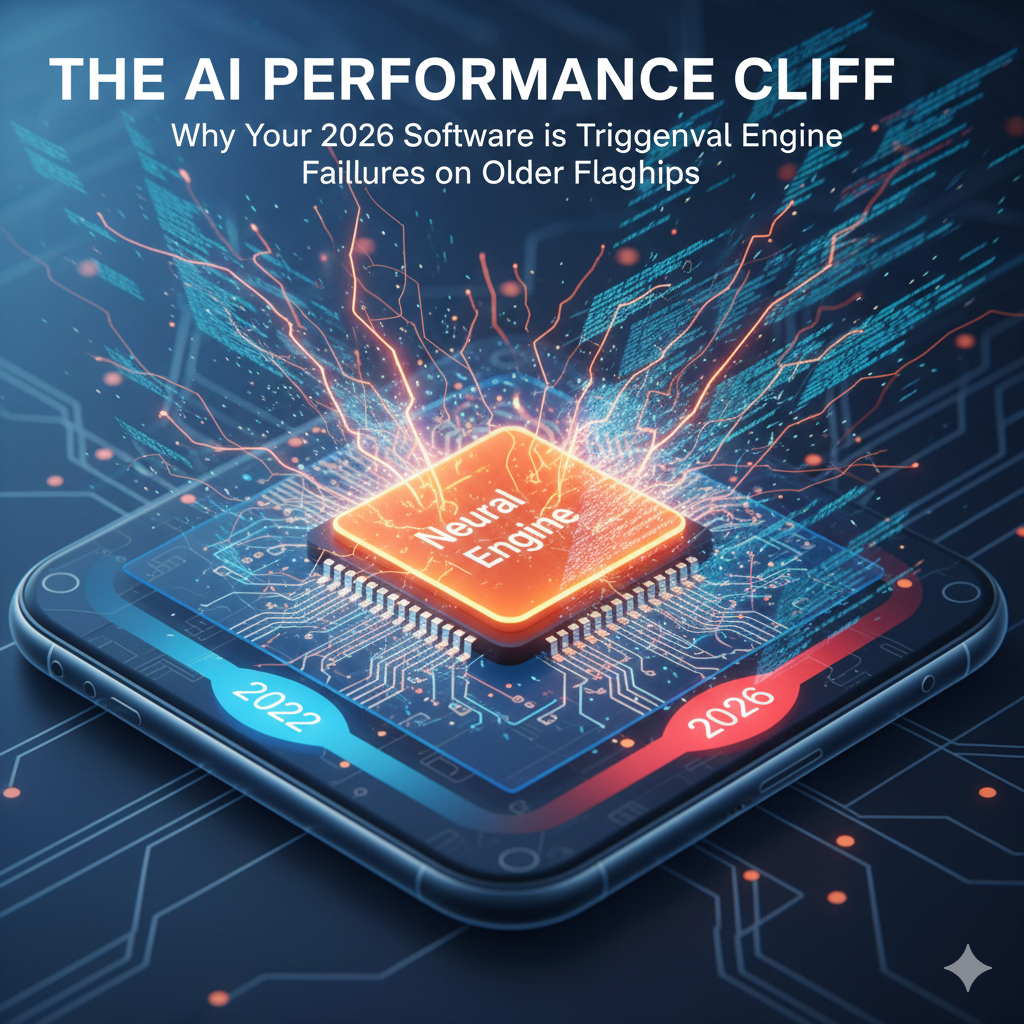
If you’ve noticed your once-snappy flagship phone stuttering, overheating, or flat-out crashing when opening modern apps, you aren’t alone. We are currently witnessing a massive shift in how software interacts with hardware. In early 2026, the complexity of background processing has reached a "performance cliff." For many users, this isn't just a matter of a slow interface; it is leading to genuine hardware strain. Having spent years analyzing device schematics and repair patterns, it’s clear that the gap between what today’s software demands and what older silicon can provide has finally snapped. Understanding this transition is vital to ensuring you don't end up with a bricked device due to avoidable thermal stress.
Section 1: The Evolution of On-Device Processing
The architecture of mobile processors has changed fundamentally over the last few years. While older flagship chips were designed for high-speed linear tasks, modern 2026 software relies almost exclusively on the Neural Engine (or NPU). This specialized sub-processor handles everything from real-time photo enhancement to predictive text and battery management.
The "Performance Cliff" occurs because legacy Neural Engines lack the memory bandwidth to handle current algorithmic loads. When a high-end app from 2026 attempts to run on a 2021 or 2022 flagship, the NPU runs at 100% capacity indefinitely. This creates a cascade of "silent" errors that the user perceives as lag, but the hardware registers as a critical thermal event. Many users find that their
Section 2: Why 2026 Software is Different
The software we are seeing today is no longer "optional" for the hardware; it is deeply integrated into the kernel. Here are the primary reasons your older device is struggling:
Continuous Neural Polling: In the past, the NPU would "wake up" for specific tasks. Now, it is constantly active, processing environmental data and user habits.
Voltage Spikes: To keep up with modern code, older chips frequently "turbo" to their maximum clock speed. This creates micro-surges in power consumption that the aging battery often cannot stabilize.
Thermal Throttling Failures: When the Neural Engine failures on older flagships occur, the device’s internal cooling—designed for 2022 standards—cannot dissipate heat fast enough. This can eventually affect other components, leading people to seek
Samsung phone repair
We have observed that even high-end tablets are not immune. If you are experiencing frequent reboots while multitasking, checking your
Section 3: Practical Advice to Protect Your Device
If you aren't ready to upgrade to the latest model, you must change how you manage your current device to avoid permanent Neural Engine failures on older flagships.
Audit Your Background Processes: Turn off "Background App Refresh" for any app that isn't mission-critical. This reduces the constant "polling" that keeps the NPU in a high-power state.
Monitor Surface Temperature: If the back of your phone feels hot to the touch during simple tasks, close all apps and let it cool. Persistent heat is a primary cause of mobile silicon degradation.
Use Professional Diagnostics: Sometimes, what looks like a software bug is actually a hardware component failing under the strain of new updates. If your device is behaving erratically, it is worth looking into
why professional repairs Battery Health Matters: An old battery cannot provide the consistent voltage required for high-intensity neural processing. If your battery is below 80% health, replacing it can actually stabilize your processor performance.
Section 4: Conclusion and Final Thoughts
The "AI Performance Cliff" is a natural result of rapid technological evolution. While it is frustrating that a four-year-old flagship feels "old," the reality is that the computational requirements of 2026 software have simply outpaced the hardware of the early 2020s.
By understanding these limitations, you can extend the life of your device through better thermal management and timely maintenance. If your device has already begun to show signs of frequent crashing or "ghost" inputs, it may be time to consult a specialist. You can
FAQs
How do I know if my Neural Engine is failing?
Common signs include extreme heat during basic tasks, the camera app freezing frequently, or the device "respringing" (a soft reboot) when you try to use advanced features.
Can a software update fix this?
Generally, no. Software updates usually add more complexity. While manufacturers sometimes "throttle" older devices to prevent failures, this actually makes the device feel slower to the user.
Is it worth repairing an older flagship in 2026?
Yes, if the repair involves the battery or cooling system. However, if the main processor (SoC) is damaged due to heat, it is often more cost-effective to browse
Disclaimer: This information is for educational purposes regarding hardware trends and mobile technology. Performance issues can vary based on individual usage and environmental factors. Always back up your data before attempting any hardware-intensive troubleshooting.