

Why Your Phone Battery Dies So Fast in Cold Weather — and the Iowa Winter Damage Most People Don't Know About
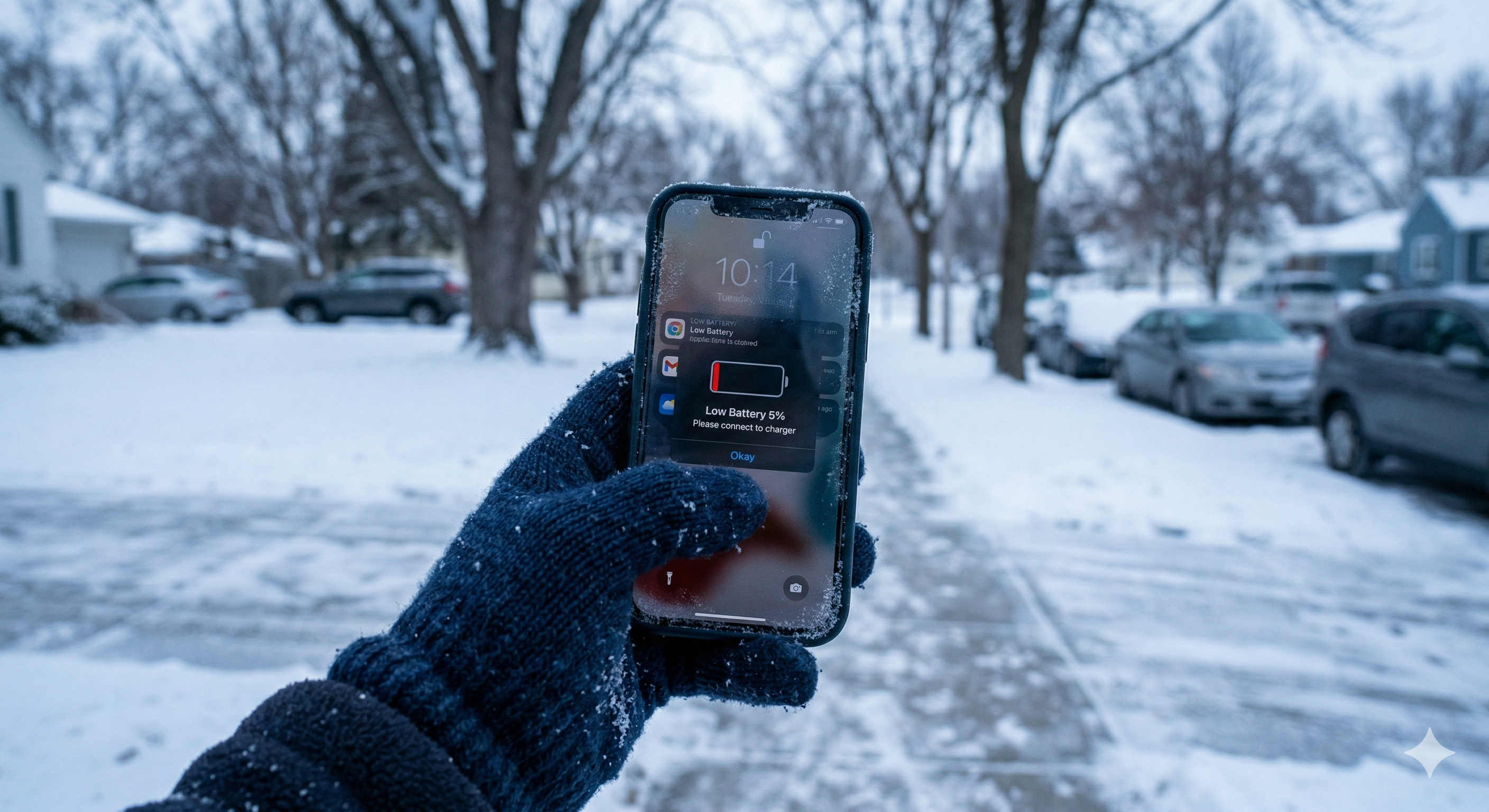
It happens every winter in Iowa. The temperature drops below freezing, you step outside, and your phone goes from 70% to dead in minutes. Not a slow drain. A cliff-dive. One second you're checking directions, the next you're staring at a black screen in a parking lot with numb fingers.
If your phone battery dies in cold weather faster than it does all summer, you're not imagining it. Cold temperatures mess with lithium-ion battery chemistry in a very real, measurable way. But here's the part most people don't realize: the damage doesn't always end when you walk back inside. Repeated cold exposure — the kind Iowa winters deliver from November through March — can cause permanent battery degradation that follows your phone into spring and beyond.
At My Mobile Spot, we see a massive spike in battery-related repairs every January and February. Customers come in confused because their phone "just started dying fast" even indoors. Most of the time, the Iowa cold already did its damage weeks earlier. This guide explains exactly what cold does to your phone, why Iowa winters are especially hard on devices, and how to protect yours before a $30 battery problem turns into something worse.
Section 1: What Cold Weather Actually Does to Your Phone Battery
The Chemistry Behind Cold-Weather Shutdowns
Every smartphone runs on a lithium-ion battery. These batteries generate power through a chemical reaction that moves lithium ions between two electrodes. That reaction depends on temperature. When the battery is warm, ions flow freely. When it drops below about 32°F (0°C), the chemical reaction slows down dramatically.
The result? Your battery can't deliver power as fast as the processor demands it. The voltage drops. Your phone's software reads that voltage drop as "almost dead" — even though the battery still holds plenty of stored energy. So the phone shuts off to protect itself.
This is why your phone might show 50% and die seconds later in the cold. The charge is still there. The battery just can't access it.
Temporary Drain vs. Permanent Damage
A single cold exposure usually causes temporary drain. Walk back inside, let the phone warm up, and the battery percentage climbs back. No lasting harm done.
But here's where Iowa winters change the equation. Repeated cycles of cold exposure and rewarming — the daily routine of stepping outside, driving, walking into work, stepping back out — stress the battery at a chemical level. Each cycle causes tiny amounts of lithium plating on the battery's anode. Over a full winter, that plating builds up. It permanently reduces the battery's capacity.
According to the U.S. Department of Energy's research on lithium-ion batteries, prolonged exposure to extreme temperatures ranks among the top accelerators of irreversible capacity loss. Iowa's freeze-thaw cycle hits that trigger repeatedly across months.
Section 2: Why Iowa Winters Are Especially Hard on Phones
The Freeze-Thaw Cycle Problem
States with consistently cold winters — like Minnesota or Montana — actually cause less battery stress than Iowa in some ways. That sounds backward, but it makes sense. A phone left in a cold car in Fargo stays cold. It's not great, but the temperature stays relatively stable.
Iowa's winters swing. One day it's 15°F. Two days later it hits 45°F. Then it crashes back down. Your phone rides that rollercoaster inside your pocket, car, and building all day long. Each swing forces the battery chemistry to adjust rapidly. That constant adjustment accelerates the lithium plating we mentioned above.
Common Iowa Winter Habits That Kill Batteries
Beyond the weather itself, certain habits make things worse. And almost everyone in Iowa does at least one of them:
- Leaving your phone in the car. Even for 20 minutes during an errand, a car interior in January can drop to single digits. The phone cools rapidly. Then you grab it and blast the heater. That fast temperature swing stresses the battery hard.
- Charging a cold phone immediately. You come inside from the cold and plug your phone in right away. Charging a cold lithium-ion battery forces current into cells that aren't ready to accept it. This accelerates lithium plating faster than cold exposure alone. Always let the phone reach room temperature before charging.
- Using the phone outdoors without insulation. Holding a bare phone in freezing wind pulls heat out of the device fast. An inside jacket pocket keeps it close to body heat. A hand in the open air does not.
- Ignoring early warning signs. Random shutoffs at 30% or 40%? Slower charging speeds? Phone feeling unusually cold to the touch even indoors? These signal that winter has already started degrading the battery. Catching it early matters.
If your phone already shows these symptoms, our repair services page covers battery diagnostics and replacements for iPhones, Samsungs, and most other brands.
Section 3: How to Protect Your Phone — and When to Get the Battery Replaced
Practical Protection Tips for Iowa Winters
You don't need a special case or fancy gear. Just a few habit changes make a real difference:
Keep it close to your body. An inside coat pocket works best. Body heat keeps the phone above the temperature threshold where chemistry starts to slow.
Never charge a cold phone. Wait 15 to 20 minutes after coming indoors. Let the device reach room temperature naturally. Don't use a hair dryer or heater to speed it up — rapid external heating can cause condensation inside the phone, which creates a whole different set of problems.
Avoid draining to zero in the cold. If your phone drops below 20% outdoors, power it off until you're back inside. Running a lithium-ion battery to zero in cold conditions causes the deepest chemical stress and the most plating damage.
Use a case with some insulation. Even a standard silicone or leather case adds a small buffer against temperature swings. It's not dramatic, but every degree helps.
When a Battery Replacement Makes Sense
If your phone already survived one or two Iowa winters, check the battery health. On iPhone, find it under Settings > Battery > Battery Health & Charging. On most Android devices, try Settings > Battery and Device Care > Diagnostics.
Anything below 80% maximum capacity means the battery has lost significant ability to hold a charge. At that point, no amount of careful habits will bring it back. The chemistry has permanently degraded.
The fix is straightforward. A battery replacement at My Mobile Spot typically takes under an hour. We keep over 1,000 parts in stock at both our Clive and Ankeny locations, so most iPhone battery replacements and Samsung battery swaps happen same-day.
For a quick price check before coming in, our instant repair quote tool gives you an estimate in under a minute. Or you can track an existing repair if you've already dropped off your device.
Don't Ignore Other Cold-Weather Damage
Battery drain gets all the attention, but Iowa winters can affect other components too. Rapid temperature changes cause condensation inside the phone — tiny droplets of moisture that form on the logic board and connectors. Over time, this leads to the same kind of corrosion you'd see from water damage.
If your phone develops charging issues, speaker problems, or erratic behavior after a cold winter, the battery might not be the only thing affected. A full diagnostic can reveal whether cold-related moisture caused damage to internal connectors or chips. Our computer repair and tablet repair teams handle the same kind of moisture diagnostics on larger devices too.
Section 4: Conclusion and Final Thoughts
Iowa winters don't just drain your phone battery temporarily. Months of freeze-thaw cycling cause real, permanent chemical damage that follows your device long after the snow melts. That's why so many people notice their battery "suddenly" can't make it through the day in February or March — the cold has been quietly degrading it since November.
The good news? Most of the damage is preventable with simple habits. Keep the phone warm, never charge it cold, and avoid draining it to zero outside. These small adjustments protect the battery chemistry that keeps your device running all day.
But if the damage already happened — if your battery health dropped below 80%, if your phone shuts off at random percentages, or if it drains noticeably faster than it did last fall — a replacement is the right call. It's quick. It's affordable. And it gives your phone another two to three years of strong battery life without replacing the whole device.
Whether you're in Clive or Ankeny, stop by My Mobile Spot for a battery check. We'll tell you exactly where your battery health stands and whether it needs replacing. Most battery swaps take less than an hour, and you'll walk out with a phone that actually lasts all day again — even in an Iowa January.
FAQs
Cold Weather Battery Questions
Why does my phone die at 40% or 50% in the cold?
The battery still has charge. But cold slows the chemical reaction that delivers power. The voltage drops, and your phone reads that as "nearly empty." It shuts down to protect the battery from deep discharge damage. Warm the phone up and the percentage usually recovers.
Can cold weather permanently damage my phone battery?
Yes. A single cold outing won't cause lasting harm. But repeated freeze-thaw cycles — the kind Iowa delivers all winter — cause lithium plating inside the battery cells. That plating permanently reduces capacity. After one or two harsh winters, many batteries lose 10% to 20% of their original capacity.
Should I use a hand warmer or heating pad to warm my phone?
No. External heat sources can warm the device unevenly. This risks condensation forming inside the phone, which can damage the logic board. Let the phone warm up naturally at room temperature. It usually takes 15 to 20 minutes.
Repair and Replacement Questions
How much does a battery replacement cost?
It varies by device. Use our instant repair quote tool for an exact number in under a minute. Most smartphone battery replacements fall in a very affordable range — far less than replacing the phone.
How do I know if my battery needs replacing or if it's just the cold?
Check your battery health in settings. If it reads 80% or above, the cold is likely causing temporary drain that reverses indoors. Below 80%, the battery has permanent capacity loss and a replacement will make a noticeable difference.
Does My Mobile Spot replace batteries for all phone brands?
We handle iPhones, Samsung devices, Google Pixels, and most other major brands. We stock over 1,000 parts across both locations, so same-day service is standard for most models.